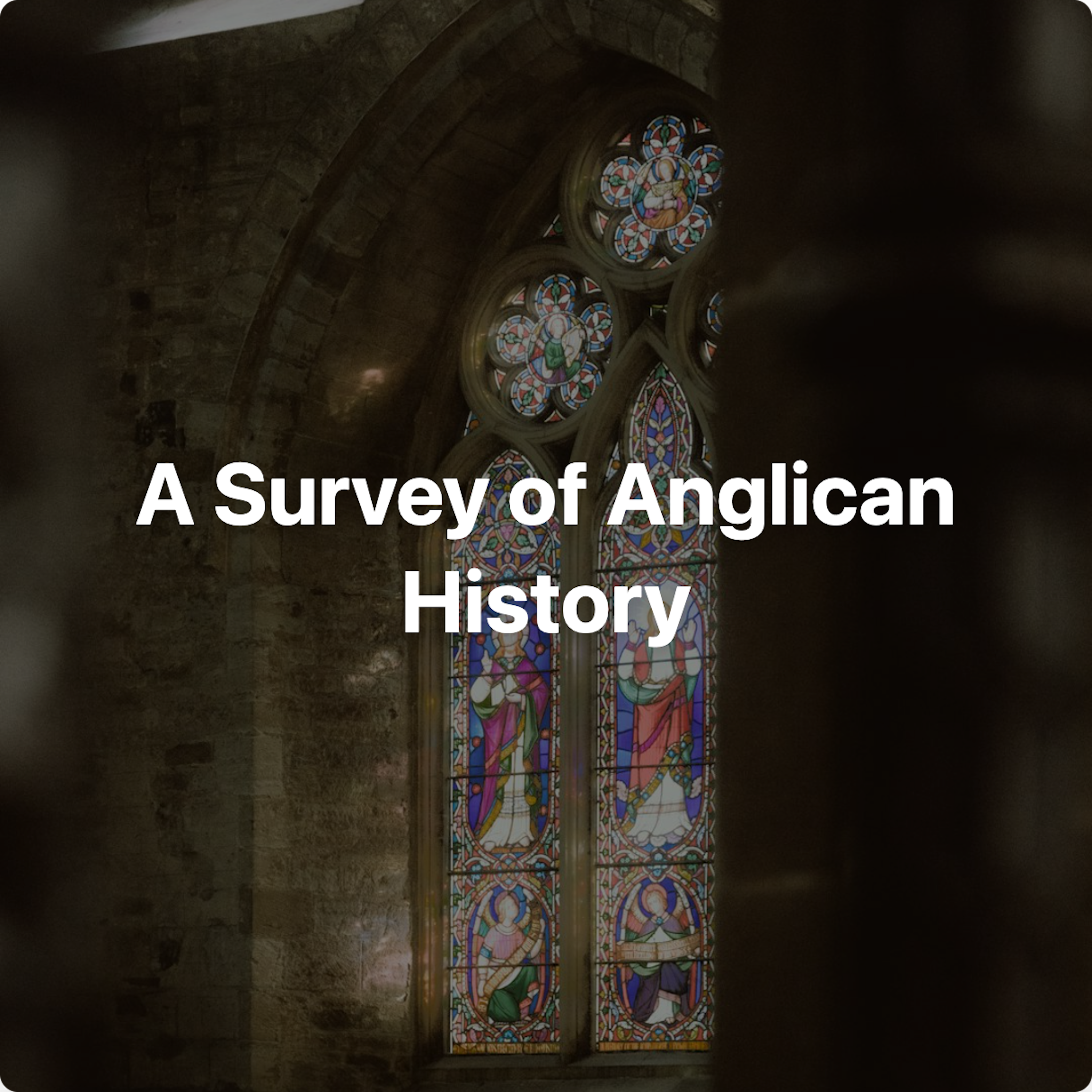
A Survey of Anglican History traces the story of Christianity in the British Isles from its Roman origins through the medieval period and beyond. Each episode explores a key figure, event, or turning point that shaped the English church, drawing on historical scholarship and primary sources. Based on content from Wikipedia and adapted for audio narration.
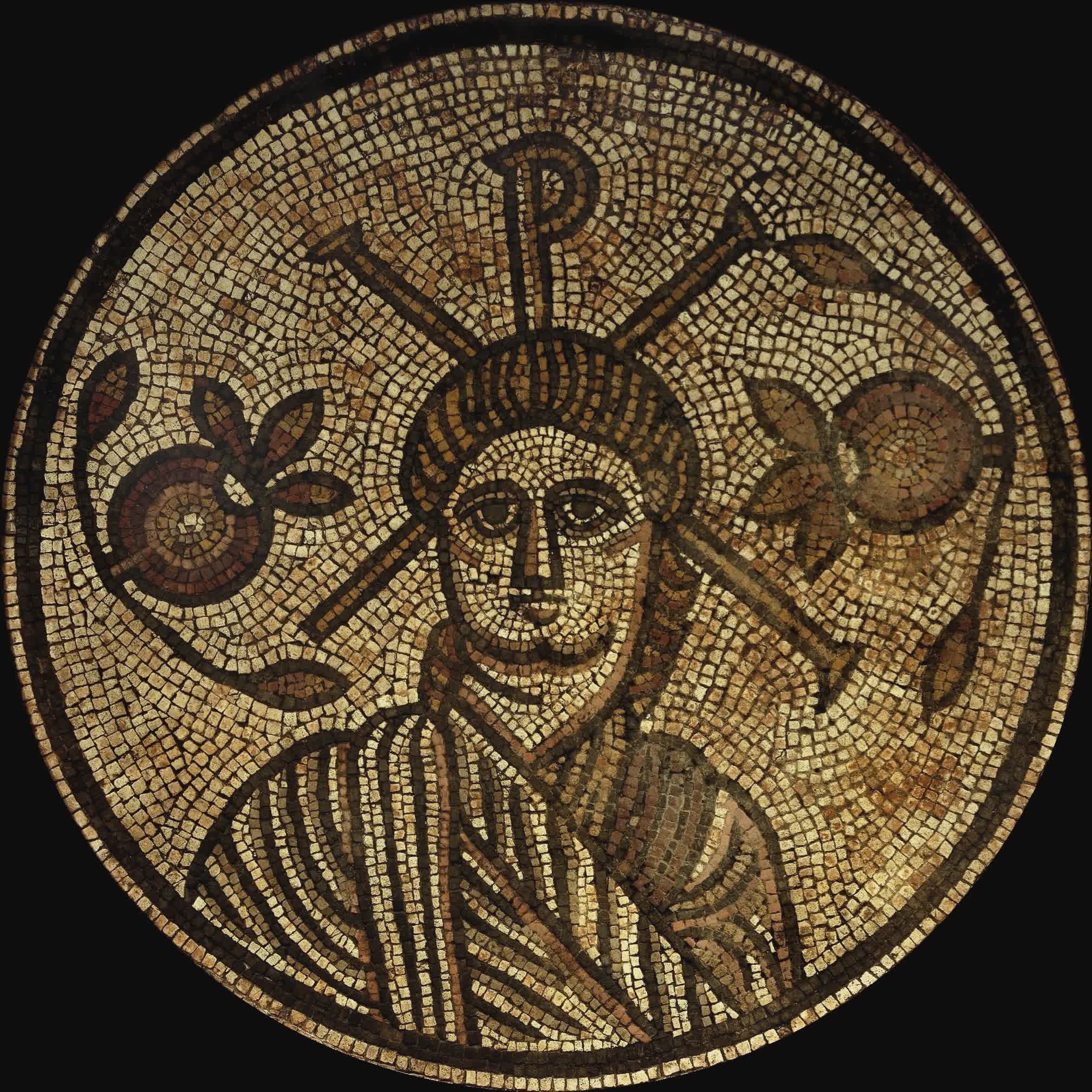
Christianity was present in Roman Britain from at least the third century until the end of the Roman imperial administration in the early fifth century, and continued in western Britain.
https://en.wikipedia.org/wiki/Christianity_in_Roman_Britain
Used under the Creative Commons Attribution-ShareAlike License. Material adapted for clarity and narration.
Roundel mosaic of Christ from Hinton St Mary, now in the British Museum. One of the earliest depictions of Christ.
Artist: Unknown
License: Public domain
Source: Wikimedia Commons
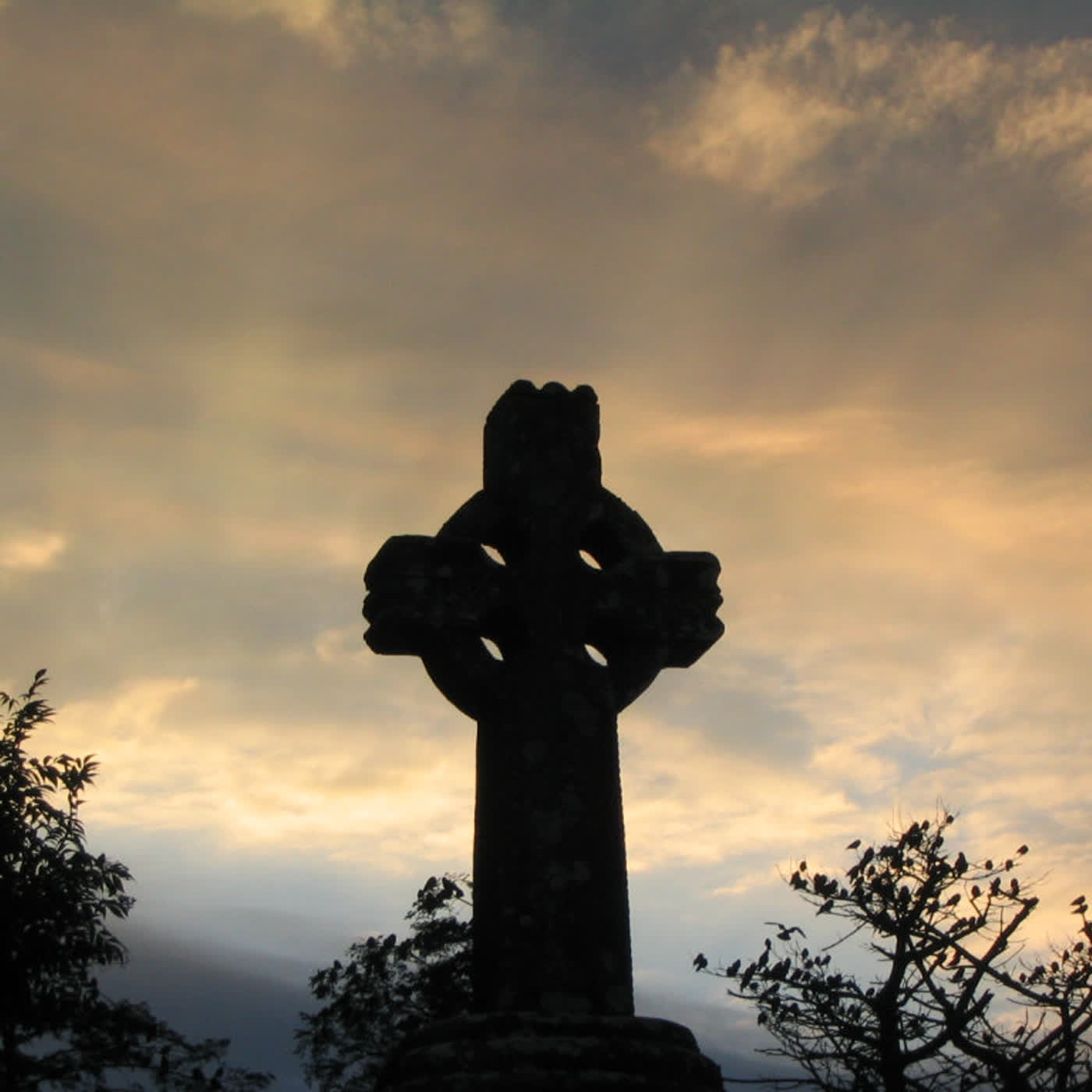
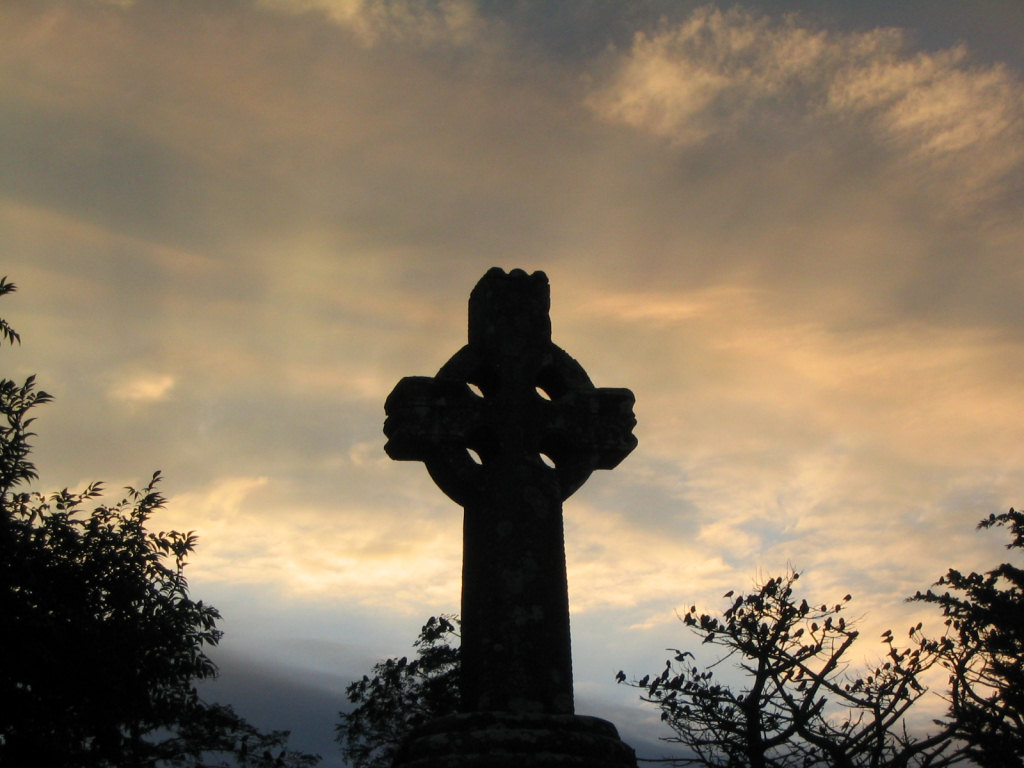
Celtic Christianity is a form of Christianity that was common — or held to be common — across the Celtic-speaking world during the Early Middle Ages. The term Celtic Church is deprecated by many historians as it implies a unified and identifiable entity entirely separate from that of mainstream Western Christendom. For this reason Brown notes a preference for the term Insular Christianity. As P...
https://en.wikipedia.org/wiki/Celtic_Christianity
Used under the Creative Commons Attribution-ShareAlike License. Material adapted for clarity and narration.
A Celtic cross photographed at dawn in Knock, Ireland
Artist: Sebd
License: CC BY-SA 3.0
Source: Wikimedia Commons
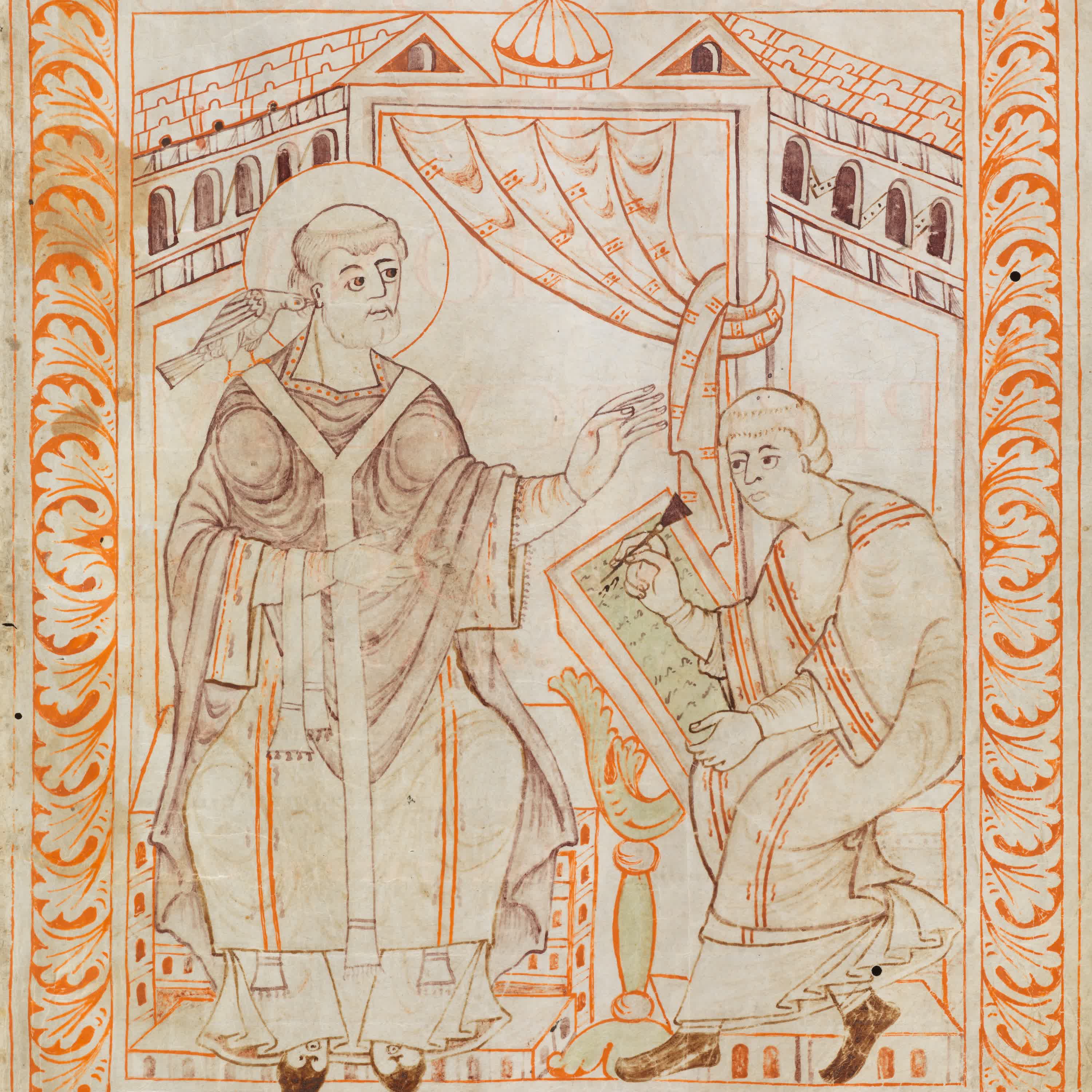
The Gregorian mission or Augustinian mission was a Christian mission sent by Pope Gregory the Great to England in 596 to convert the Anglo-Saxons. The mission was headed by Augustine of Canterbury. By the time of the death of the last missionary in 653 the mission had established Christianity among the southern Anglo-Saxons. Along with the Irish and Frankish missions it converted Anglo-Saxons i...
https://en.wikipedia.org/wiki/Gregorian_mission
Used under the Creative Commons Attribution-ShareAlike License. Material adapted for clarity and narration.
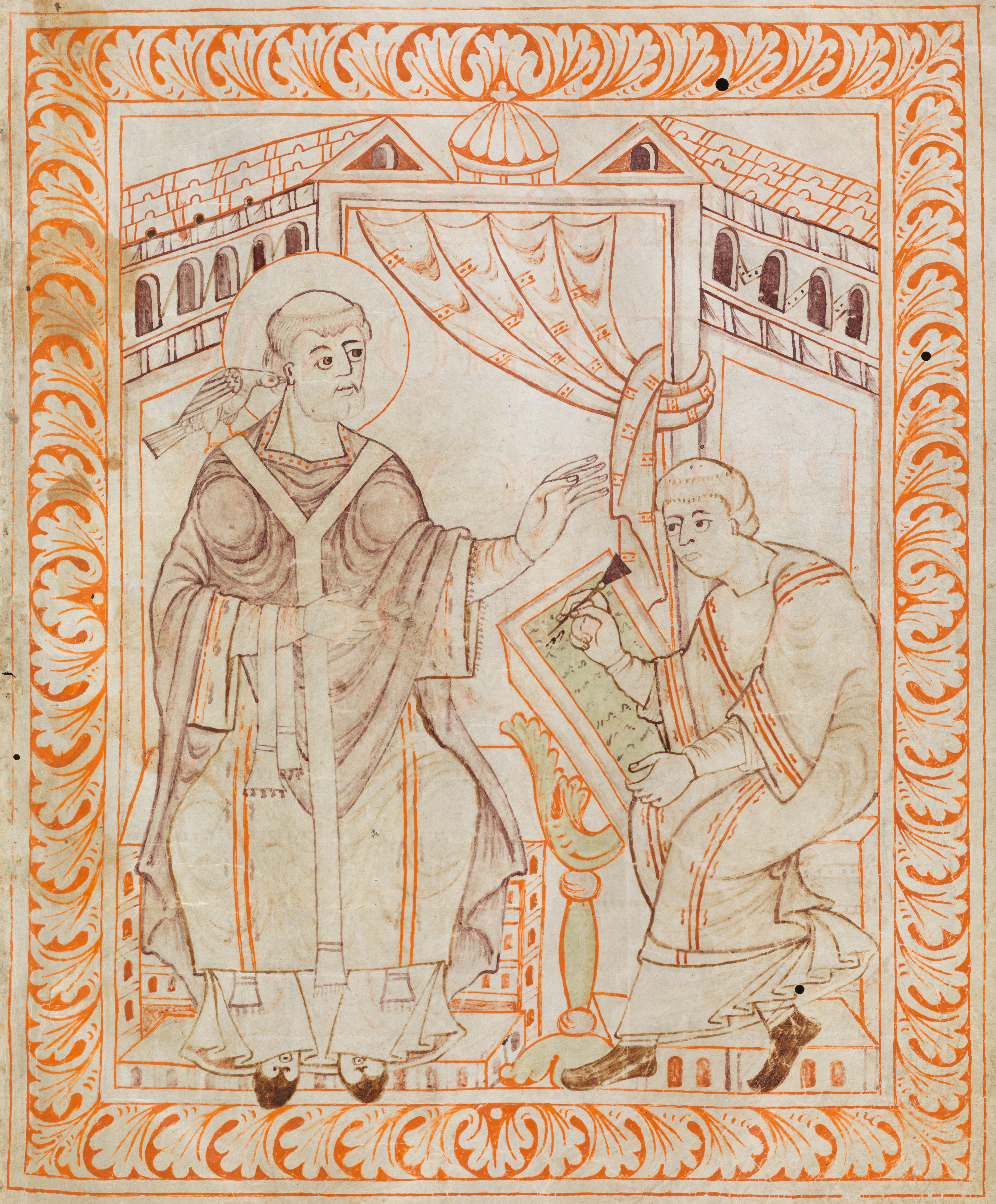
Pope Gregory I dictating Gregorian chants, from the Antiphonary of Hartker of Sankt Gallen
Artist: Unknown
License: Public domain
Source: Wikimedia Commons
Date: circa 1000
Augustine of Canterbury — early 6th century to most likely 26 May 604 — was a Christian monk who became the first archbishop of Canterbury in the year 597.
https://en.wikipedia.org/wiki/Augustine_of_Canterbury
Used under the Creative Commons Attribution-ShareAlike License. Material adapted for clarity and narration.
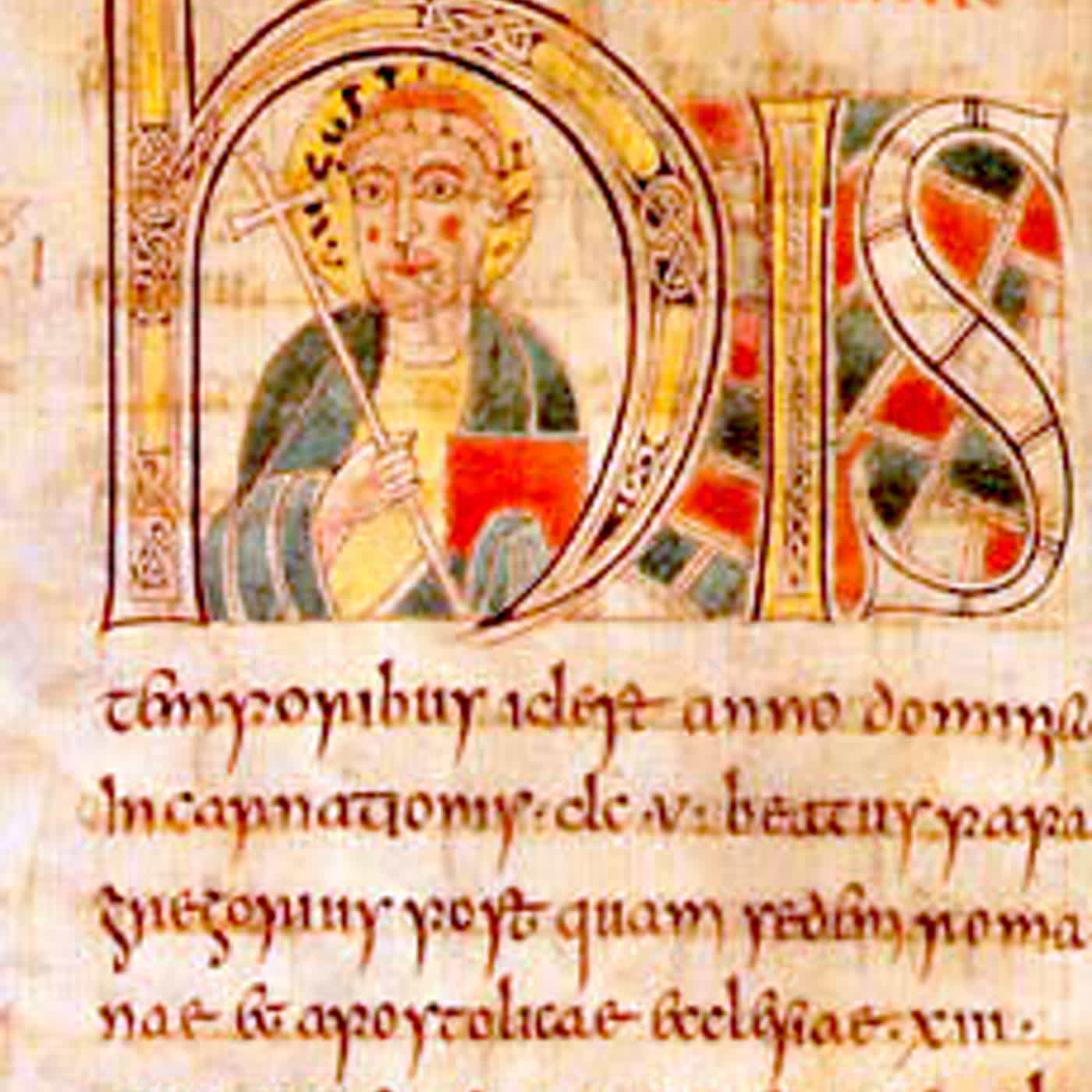
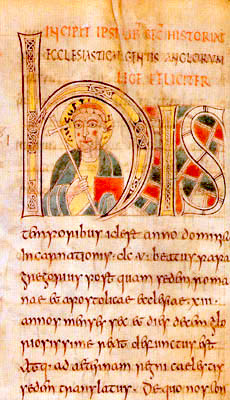
The opening three letters of Book 2 of Bede are decorated, to a height of 8 lines of the text, and the opening h contains a bust portrait of a haloed figure carrying a cross and a book. This is probably intended to be St. Gregory the Great, although a much later hand has identified the figure as St. Augustine of Canterbury.
Artist: Anonymous, Scriptorium of Wearmouth-Jarrow Abbey
License: Public domain
Source: Wikimedia Commons
Date: circa 746
The Synod of Whitby was a Christian administrative gathering held in Northumbria in 664, wherein King Ozweeoo ruled that his kingdom would calculate Easter and observe the monastic tonsure according to the customs of Rome rather than the customs practised by Irish monks at Iona and its satellite institutions. The synod was summoned at Hilda's double monastery of Streneshalk later called Whitby ...
https://en.wikipedia.org/wiki/Synod_of_Whitby
Used under the Creative Commons Attribution-ShareAlike License. Material adapted for clarity and narration.
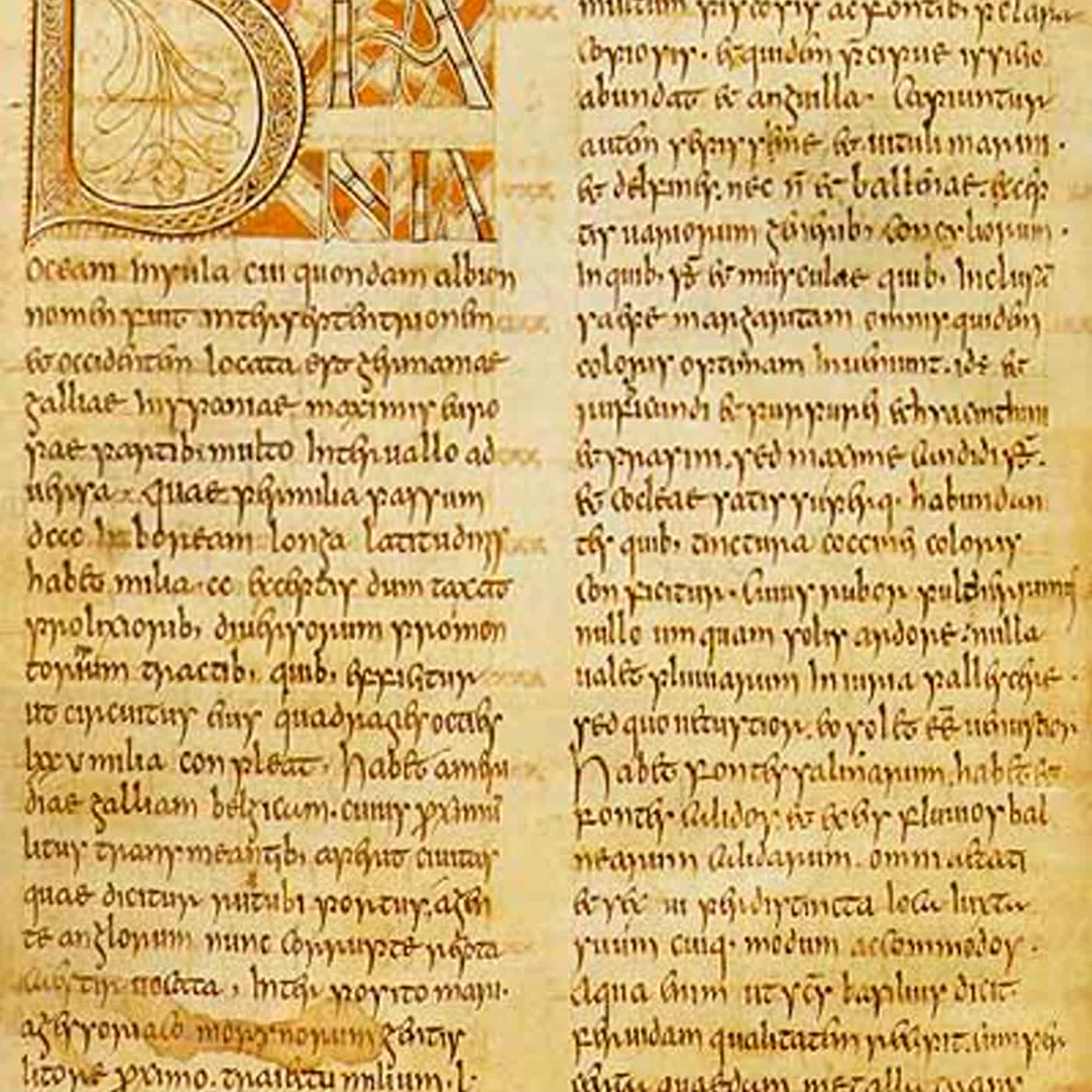
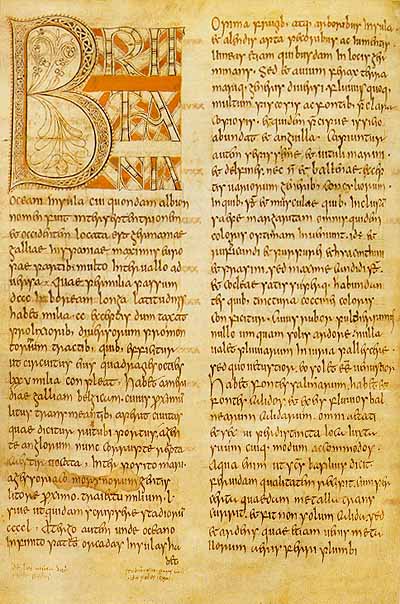
The Saint Petersburg Bede is an early surviving manuscript of Bede's 8th century history, the Historia ecclesiastica gentis Anglorum. It is so named because it was taken to the Russian National Library of Saint Petersburg in Russia at the time of the French Revolution.
Artist: Bede
License: Public domain
Source: Wikimedia Commons
This episode covers two towering figures of the early English church. Theodore of Tarsus (602-690) was Archbishop of Canterbury from 668 to 690. Born in the Greek-speaking east, he fled the Persian and Muslim conquests before eventually being appointed archbishop by Pope Vitalian. Theodore reformed the English church, established a renowned school at Canterbury, and organized the first synods. The Venerable Bede (672-735) was an English monk, author, and scholar at the monastery of Monkwearmouth-Jarrow. His most famous work, the Ecclesiastical History of the English People, earned him the title "The Father of English History." Bede also helped popularize the Anno Domini dating system and was declared a Doctor of the Church in 1899.
https://en.wikipedia.org/wiki/Theodore_of_Tarsus
https://en.wikipedia.org/wiki/Bede
Used under the Creative Commons Attribution-ShareAlike License. Material adapted for clarity and narration.
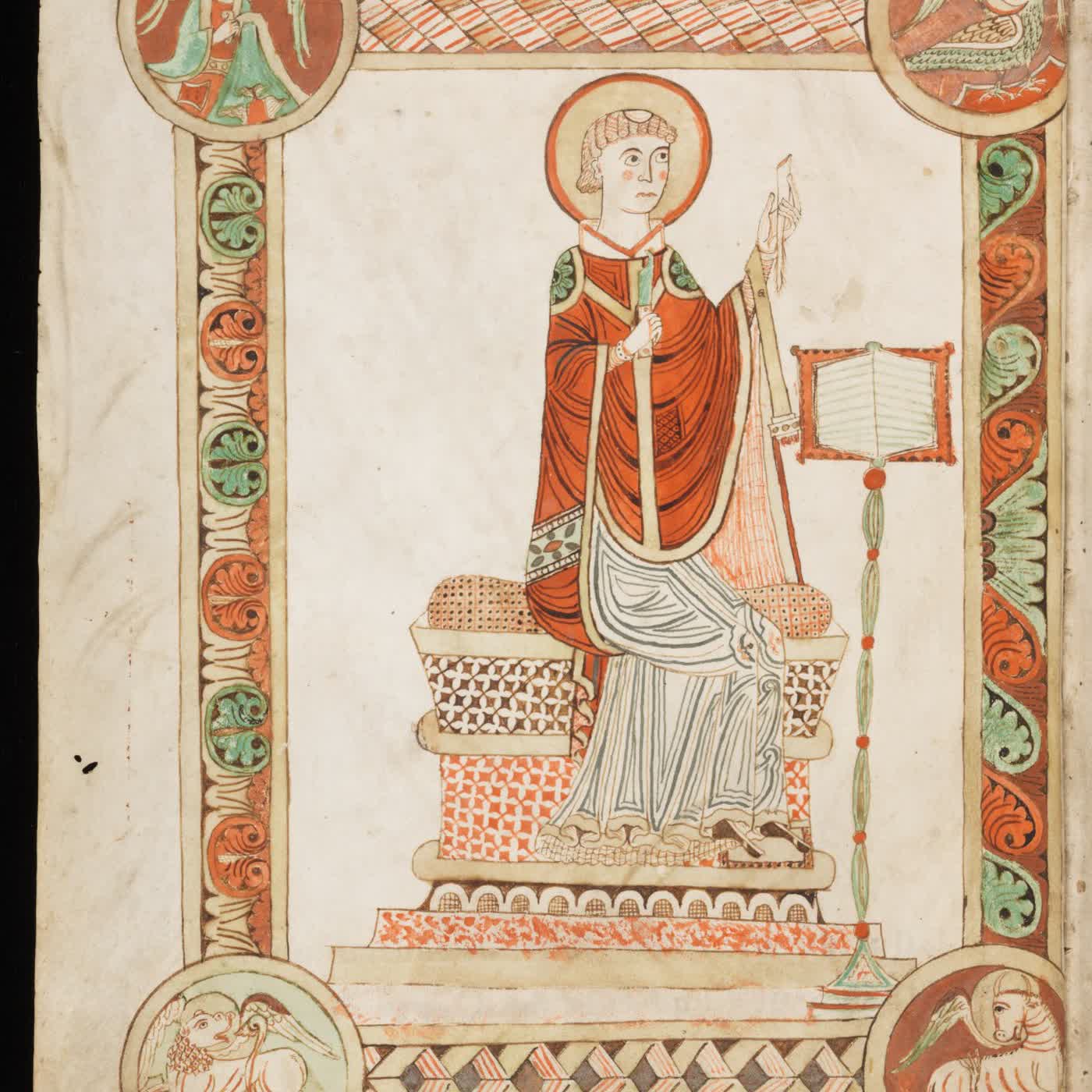
Venerable Bede in an illustrated manuscript, writing his Ecclesiastical History of the English People
Artist: Unknown
License: Public domain
Source: Wikimedia Commons
The Ecclesiastical History of the English People (Latin: Historia Ecclesiastica Gentis Anglorum), written by Bede in about 731is a history of the Christian Churches in England, and of England generally; its main focus is on the growth of Christianity. It was composed in Latin and is believed to have been completed in 731 when Bede was approximately 59 years old. It is considered one of the most...
https://en.wikipedia.org/wiki/Ecclesiastical_History_of_the_English_People
Used under the Creative Commons Attribution-ShareAlike License. Material adapted for clarity and narration.
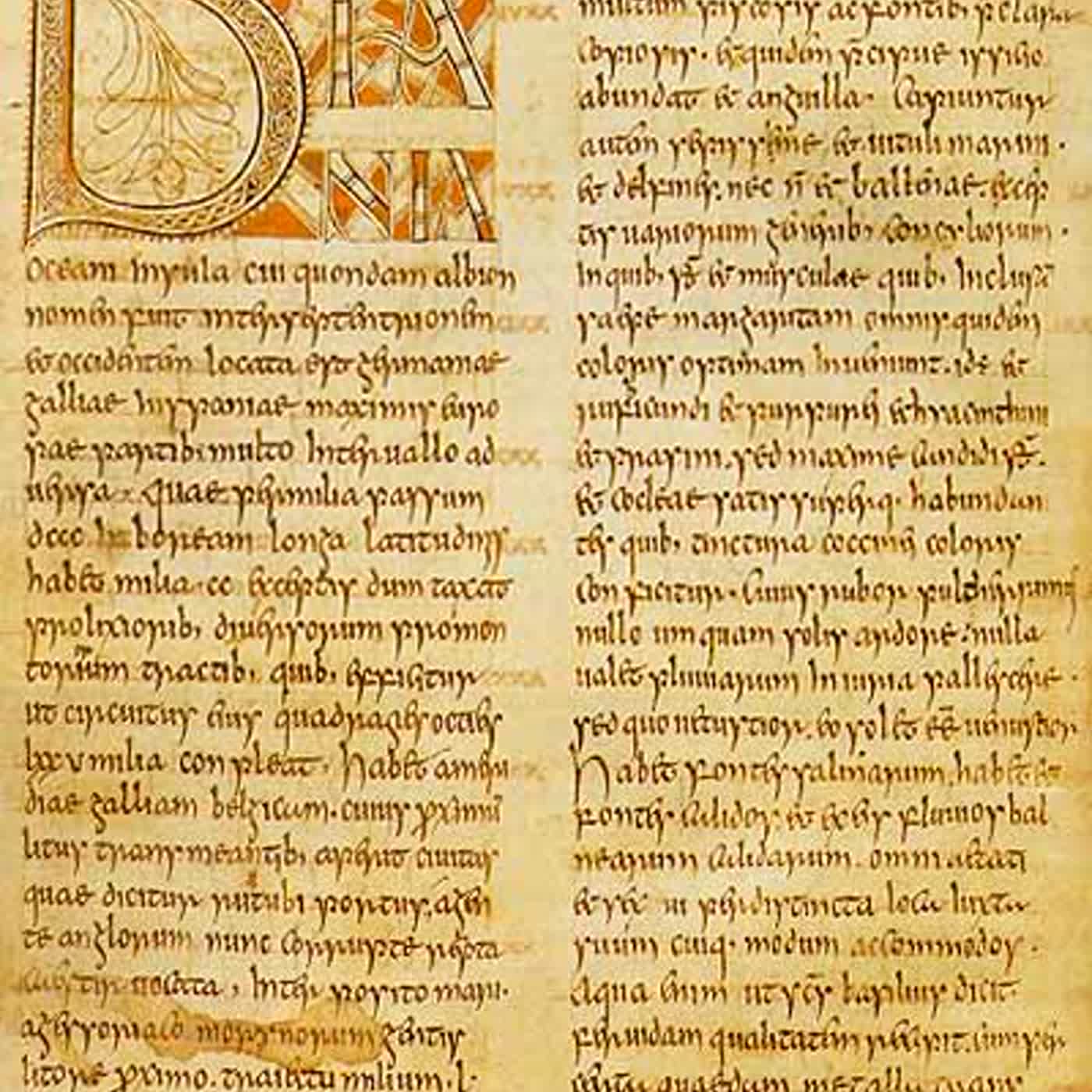
The Saint Petersburg Bede is an early surviving manuscript of Bede's 8th century history, the Historia ecclesiastica gentis Anglorum. It is so named because it was taken to the Russian National Library of Saint Petersburg in Russia at the time of the French Revolution.
Artist: Bede
License: Public domain
Source: Wikimedia Commons
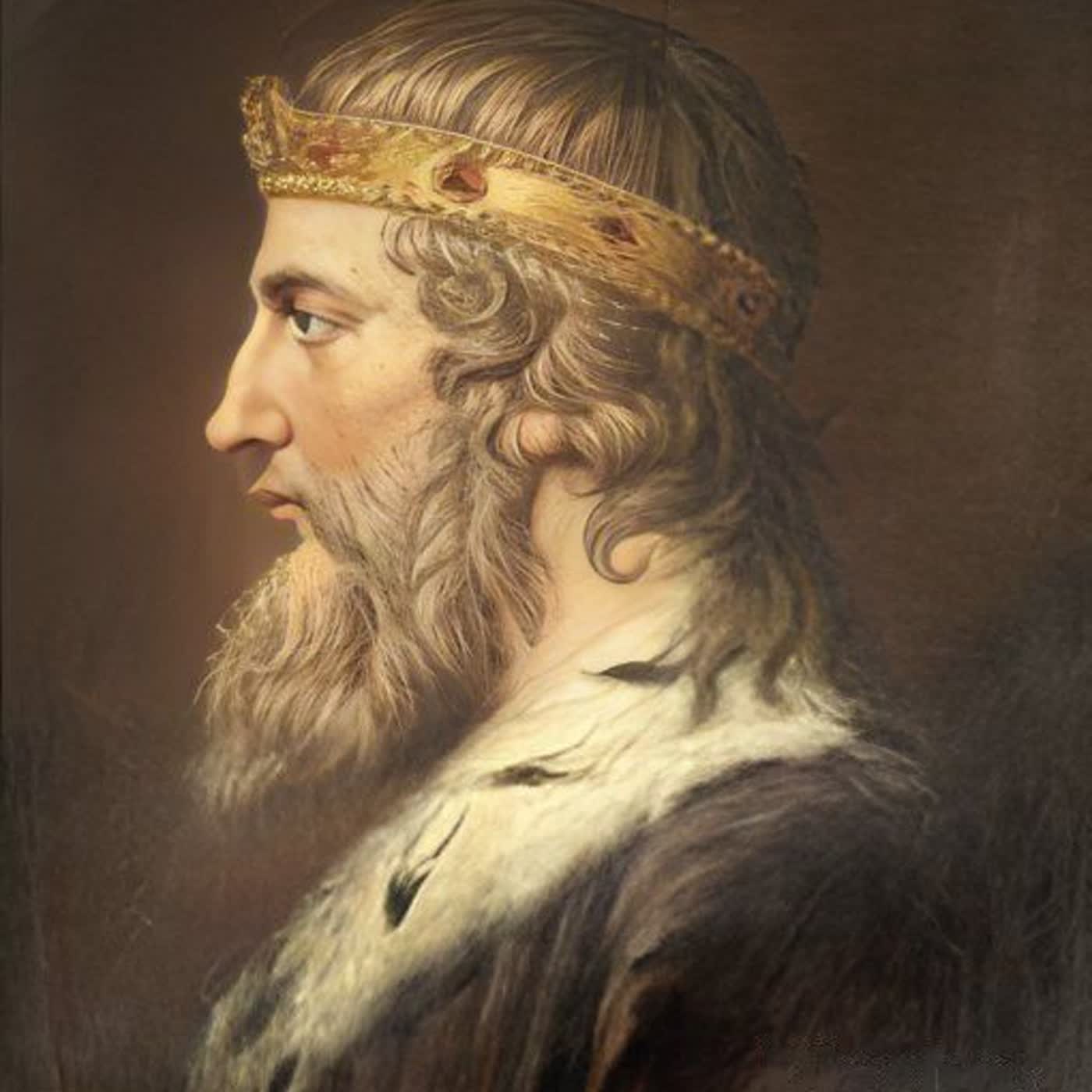
Alfred the Great was King of the West Saxons from 871 to 886, and King of the Anglo-Saxons from 886 until his death in 899. He was the youngest son of King Ethelwulf and Ethelwulf's first wife Osburh who both died when Alfred was young. Three of Alfred's brothers — Ethelbald, Ethelbert and Ethelred — reigned in turn before him. Under Alfred's rule considerable administrative and military reform...
https://en.wikipedia.org/wiki/Alfred_the_Great
Used under the Creative Commons Attribution-ShareAlike License. Material adapted for clarity and narration.
Portrait of Alfred the Great by Samuel Woodforde
Artist: Samuel Woodforde (attributed)
License: Public domain
Source: Wikimedia Commons
Date: 1790
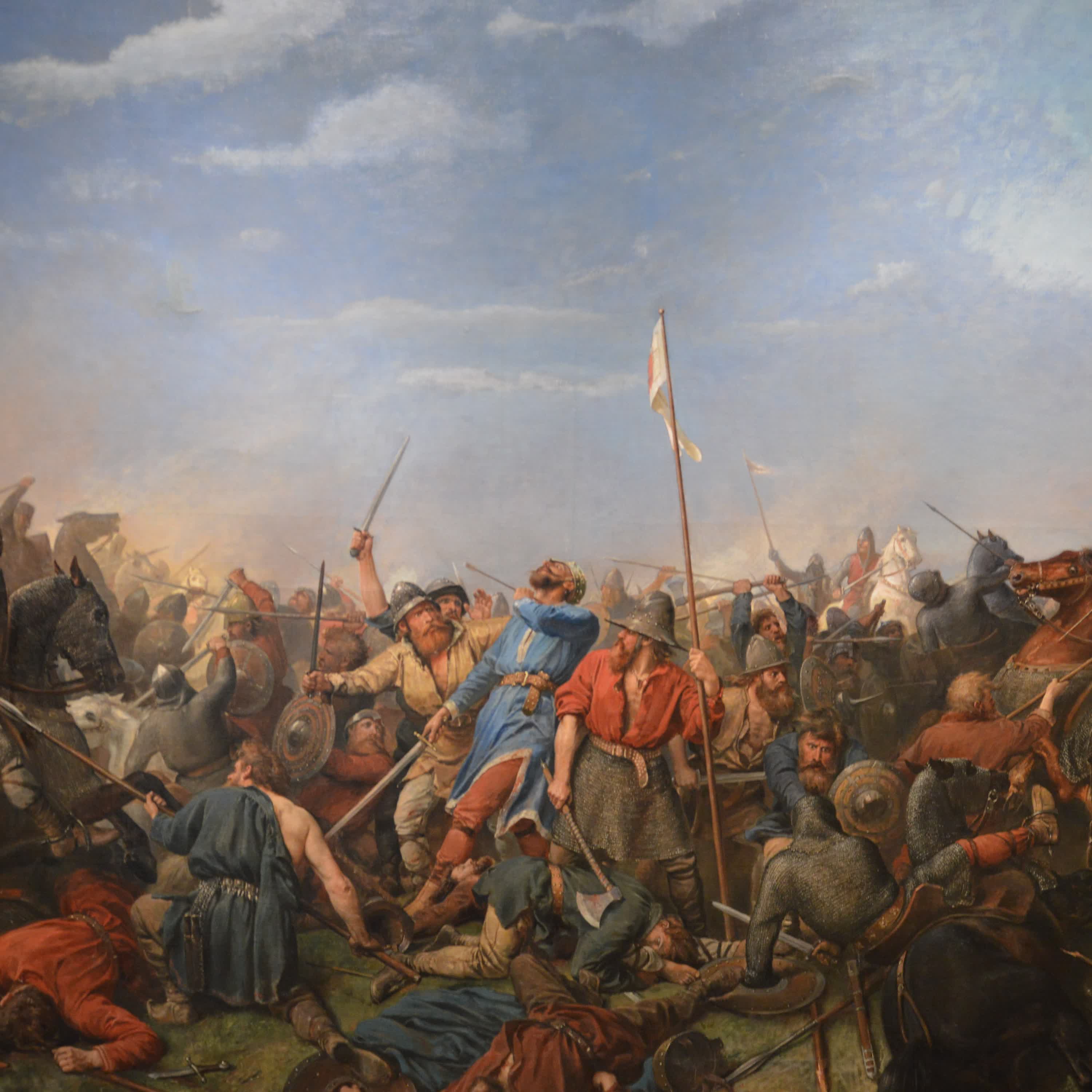
Viking activity in the British Isles occurred during the Early Middle Ages, the 8th to the 11th centuries , when Scandinavians travelled to the British Isles to raid, conquer, settle, and trade. They are generally referred to as Vikings, but some scholars debate whether the term Viking represented all Scandinavian settlers or just those who used violence. At the start of the early medieval peri...
https://en.wikipedia.org/wiki/Viking_activity_in_the_British_Isles
https://en.wikipedia.org/wiki/Danelaw
Used under the Creative Commons Attribution-ShareAlike License. Material adapted for clarity and narration.
The Battle of Stamford Bridge by Peter Nicolai Arbo (1870)
Artist: Peter Nicolai Arbo
License: Public domain
Source: Wikimedia Commons
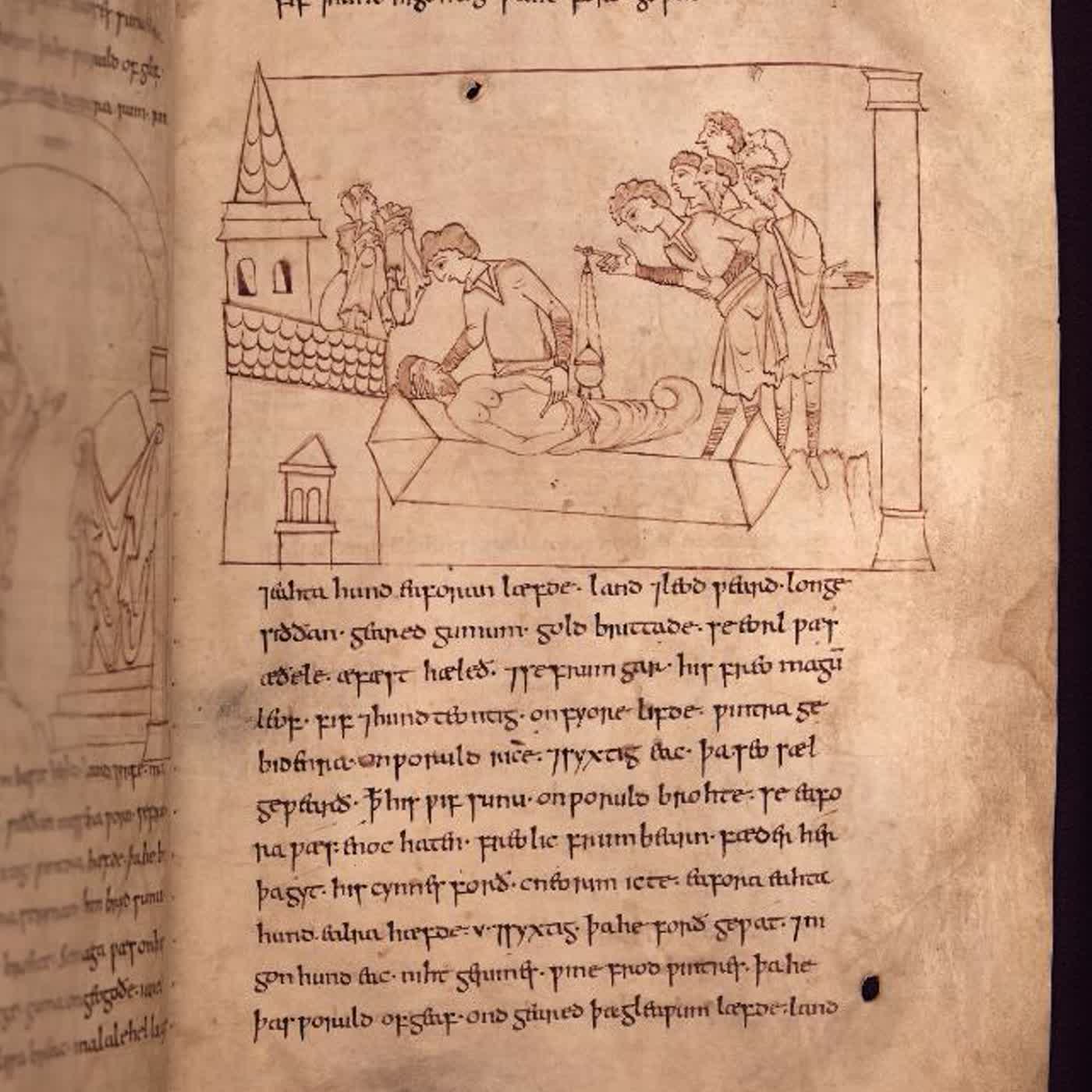
The English Benedictine Reform or Monastic Reform of the English church in the late tenth century was a religious and intellectual movement in the later Anglo-Saxon period. In the mid-tenth century almost all monasteries were staffed by secular clergy who were often married. The reformers sought to replace them with celibate contemplative monks following the Rule of Saint Benedict. The movement...
https://en.wikipedia.org/wiki/English_Benedictine_Reform
Used under the Creative Commons Attribution-ShareAlike License. Material adapted for clarity and narration.
'The Cædmon Manuscript': parts of Genesis, Exodus and Daniel in Old English verse, illustrated with Anglo-Saxon drawings, c. A.D. 1000.; 59
Artist: Unknown
License: Public domain
Source: Wikimedia Commons
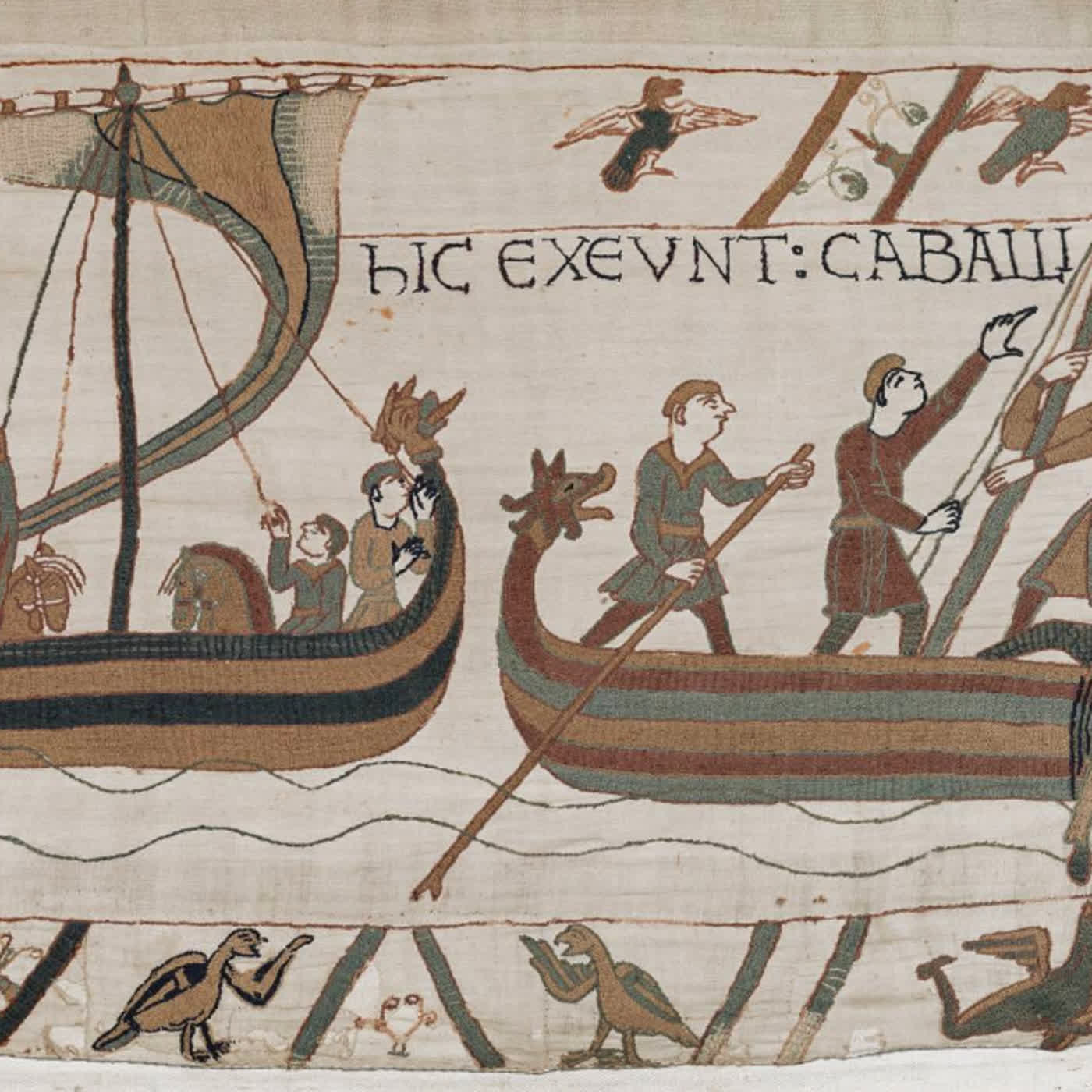
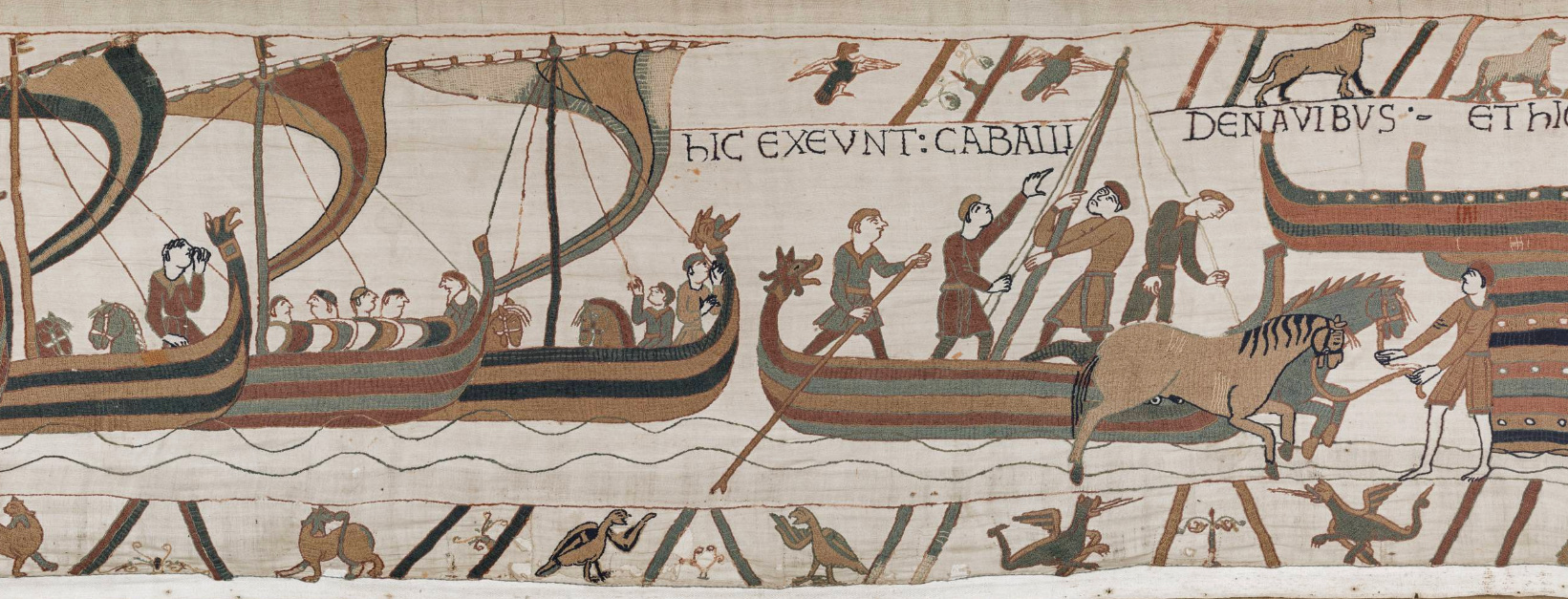
The Norman Conquest of England (or the Conquest) was an 11th-century invasion by an army made up of thousands of Norman, French, Flemish, and Breton troops, all led by the Duke of Normandy, later styled William the Conqueror. William's claim to the English throne derived from his familial relationship with the childless Anglo-Saxon king Edward the Confessor who may have encouraged William's hop...
https://en.wikipedia.org/wiki/Norman_Conquest
Used under the Creative Commons Attribution-ShareAlike License. Material adapted for clarity and narration.
Bayeux Tapestry Scene 39, depicting Norman ships
Artist: Unknown
License: Public domain
Source: Wikimedia Commons
Date: circa 1070
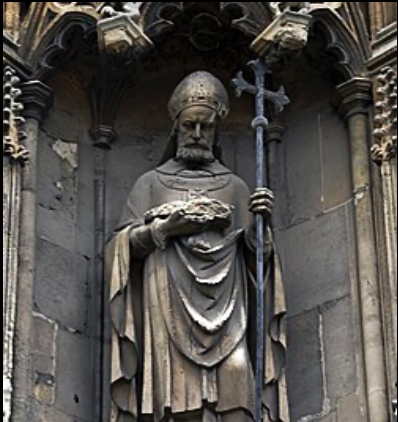
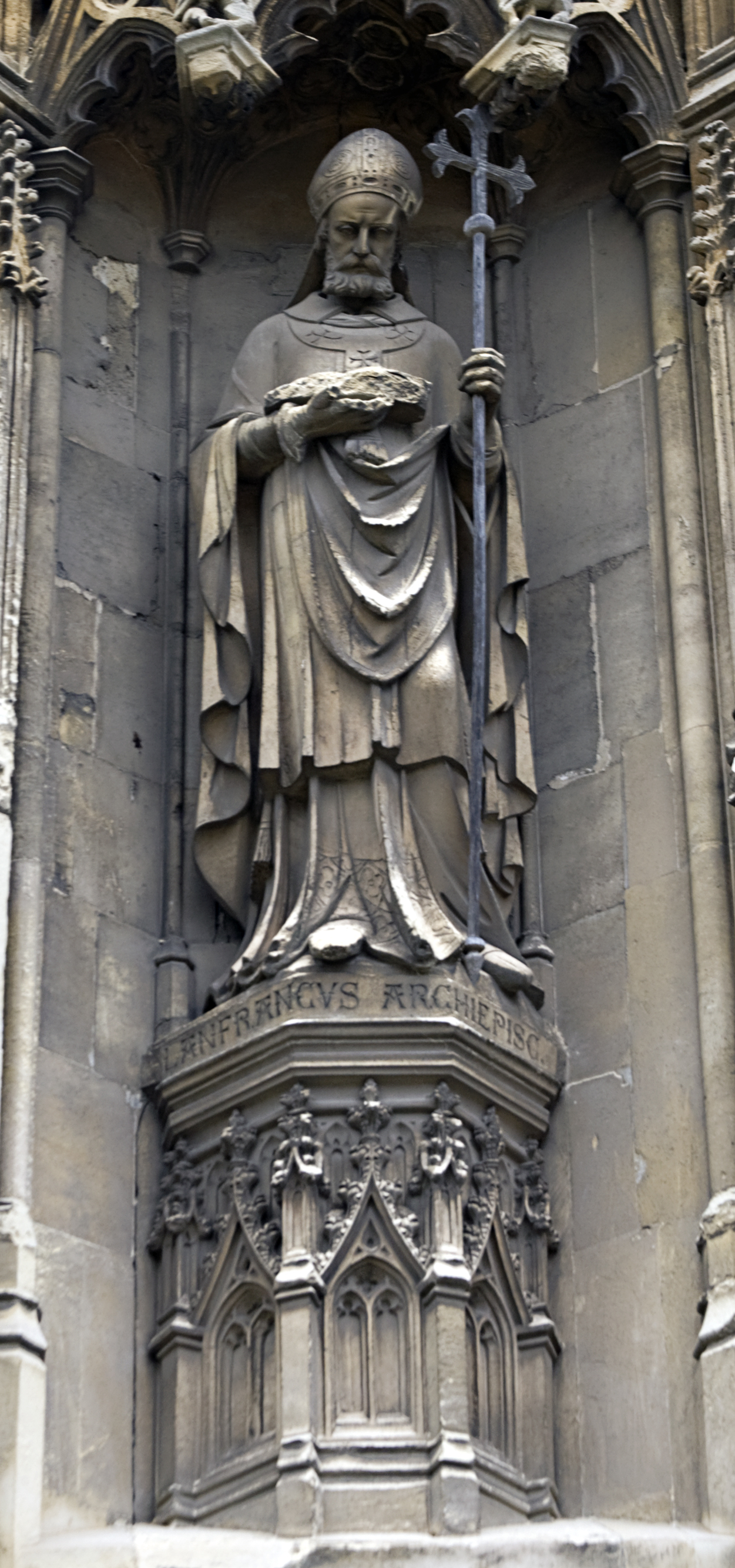
Lanfrank , born around 1010 and died 24 May 1089, was an Italian-born English churchman, monk and scholar. Born in Italy, he moved to Normandy to become a Benedictine monk at Bec. He served successively as prior of Bec Abbey and abbot of Saint Stephen's Abbey in Caen, Normandy and then as Archbishop of Canterbury in England, following its conquest by William the Conqueror. He is also variously...
https://en.wikipedia.org/wiki/Lanfranc
Used under the Creative Commons Attribution-ShareAlike License. Material adapted for clarity and narration.
Statue of Lanfranc, Archbishop of Canterbury, from the exterior of Canterbury Cathedral
Artist: Ealdgyth
License: CC BY-SA 3.0
Source: Wikimedia Commons
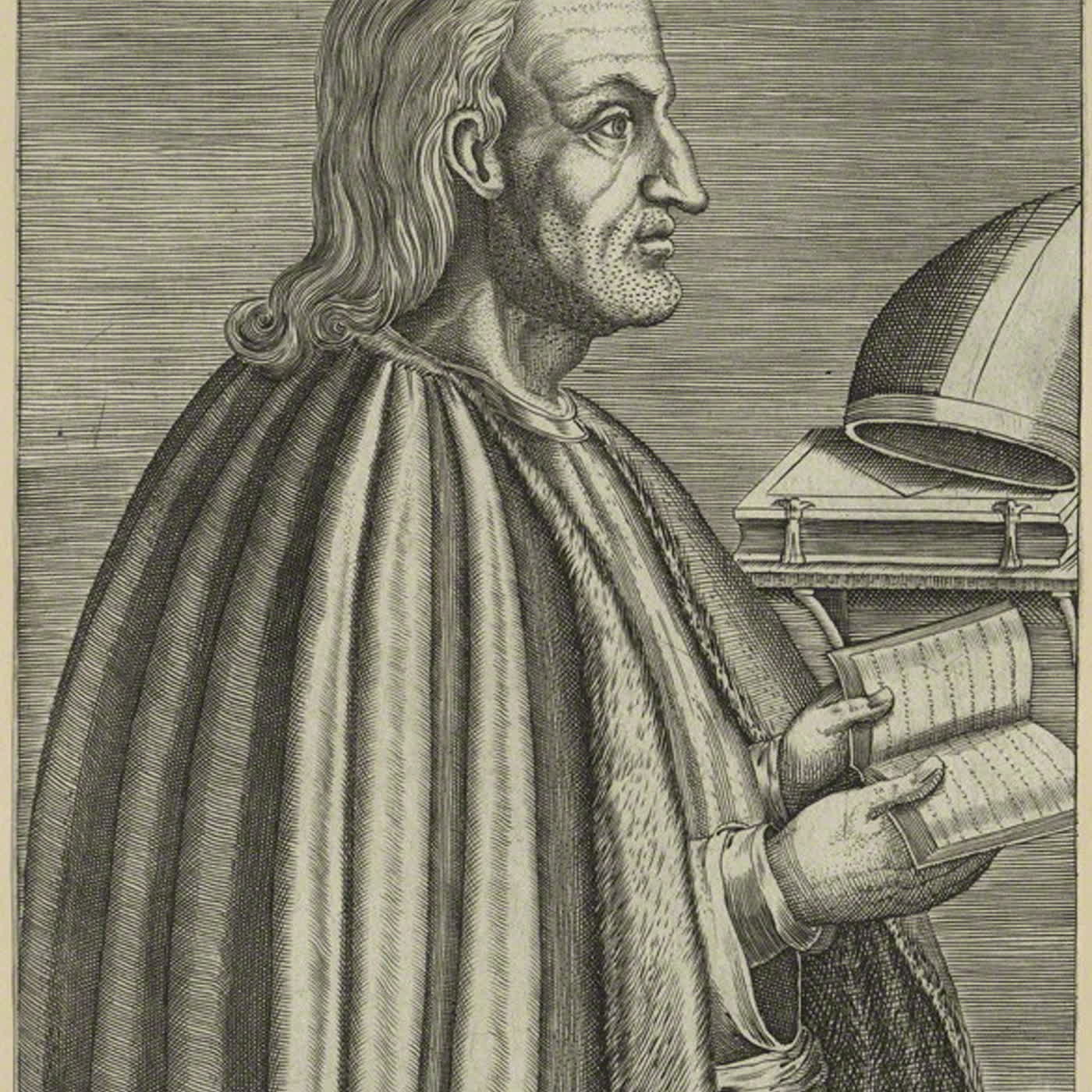
Anselm of Canterbury , who lived from 1033 to 1109,, also known as Anselm of Aosta after his birthplace and Anselm of Bec after his monastery, was an Italian Benedictine monk, abbot, philosopher, and theologian of the Catholic Church, who served as Archbishop of Canterbury from 1093 to 1109. As Archbishop of Canterbury, he defended the church's interests in England amid the Investiture Contro...
https://en.wikipedia.org/wiki/Anselm_of_Canterbury
Used under the Creative Commons Attribution-ShareAlike License. Material adapted for clarity and narration.
A late-16th century line engraving of St Anselm, inscribed Anselme Arch. de Cantorberi
Artist: Unknown
License: Public domain
Source: Wikimedia Commons
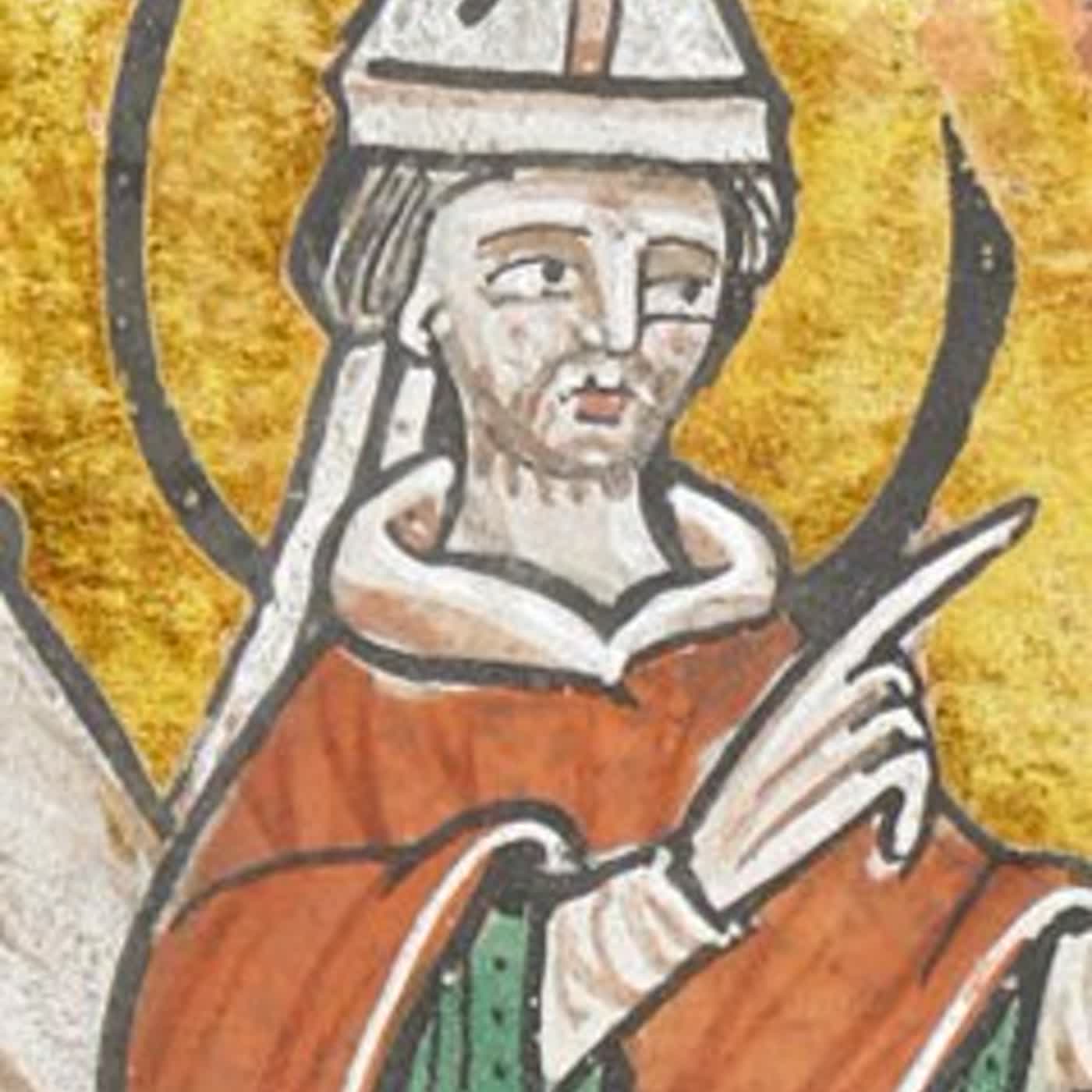
Thomas Becket , also known as Saint Thomas of Canterbury, Thomas of London and later Thomas à Becket who lived from 1119 to 1170, was an English cleric and statesman who served as Lord Chancellor from 1155 to 1162, and then as Archbishop of Canterbury from 1162 until his death in 1170. He is known for his conflict with King Henry II over the rights and privileges of the Church and was murdered ...
https://en.wikipedia.org/wiki/Thomas_Becket
Used under the Creative Commons Attribution-ShareAlike License. Material adapted for clarity and narration.
Archbishop of Canterbury Thomas Becket, miniature from a manuscript circa 1180
Artist: Unknown Miniaturist, English (active 1170s in Cirencester)
License: Public domain
Source: Wikimedia Commons
Date: circa 1180
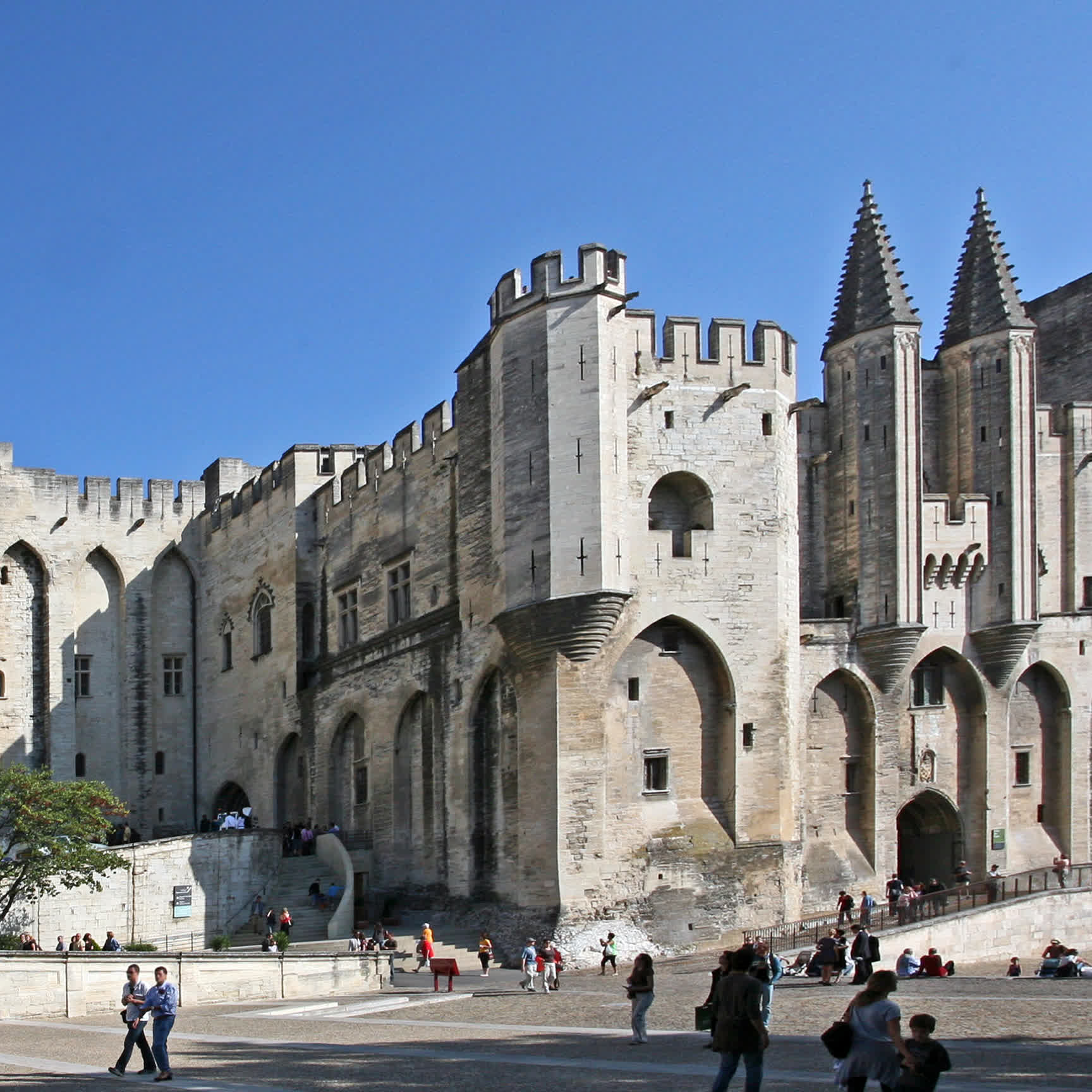
The Avignon Papacy was the period from 1309 to 1376 during which seven successive popes resided in Avignon (at the time within the Kingdom of Arles, part of the Holy Roman Empire, now part of France) rather than in Rome. The situation arose from the conflict between the papacy and the French crown, culminating in the death of Pope Boniface VIII after his arrest and maltreatment by agents of ...
https://en.wikipedia.org/wiki/Avignon_Papacy
Used under the Creative Commons Attribution-ShareAlike License. Material adapted for clarity and narration.
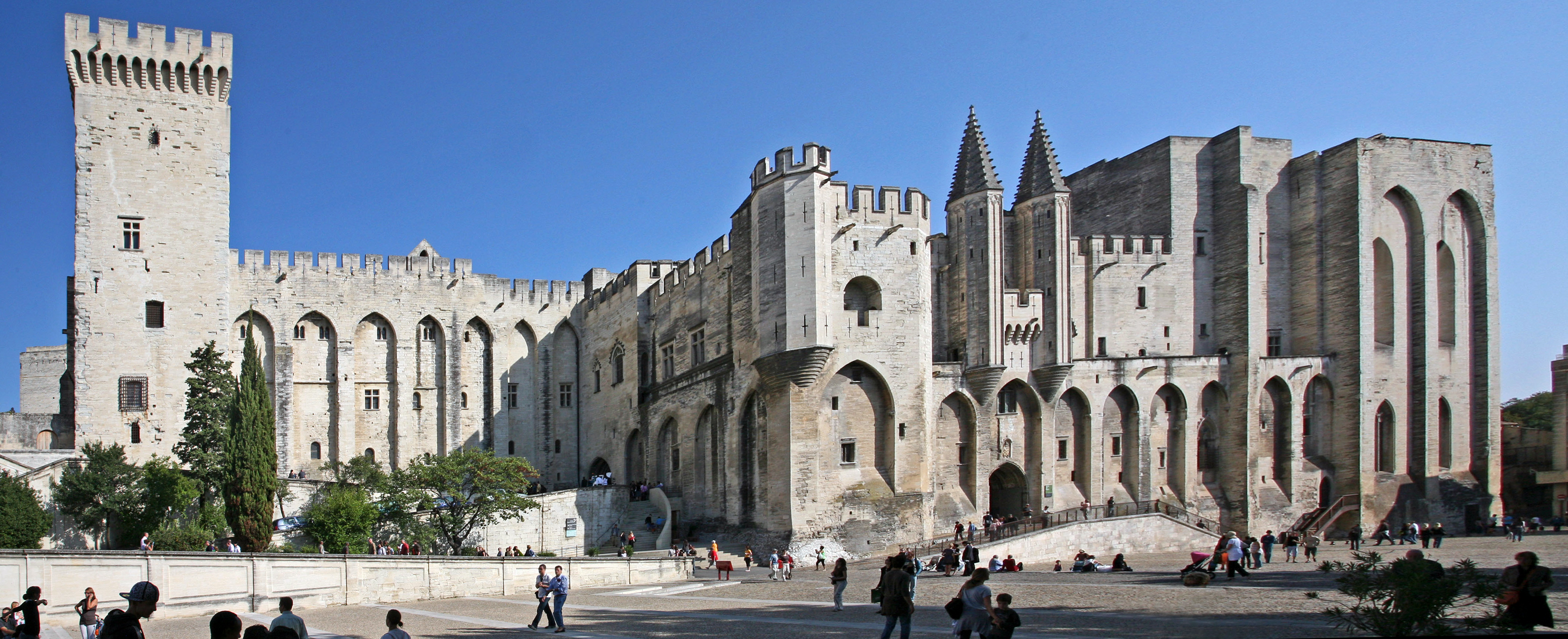
Western exterior of the Palais des Papes (Papal Palace) in Avignon, France
Artist: Jean-Marc Rosier (www.rosier.pro)
License: CC BY-SA 3.0
Source: Wikimedia Commons
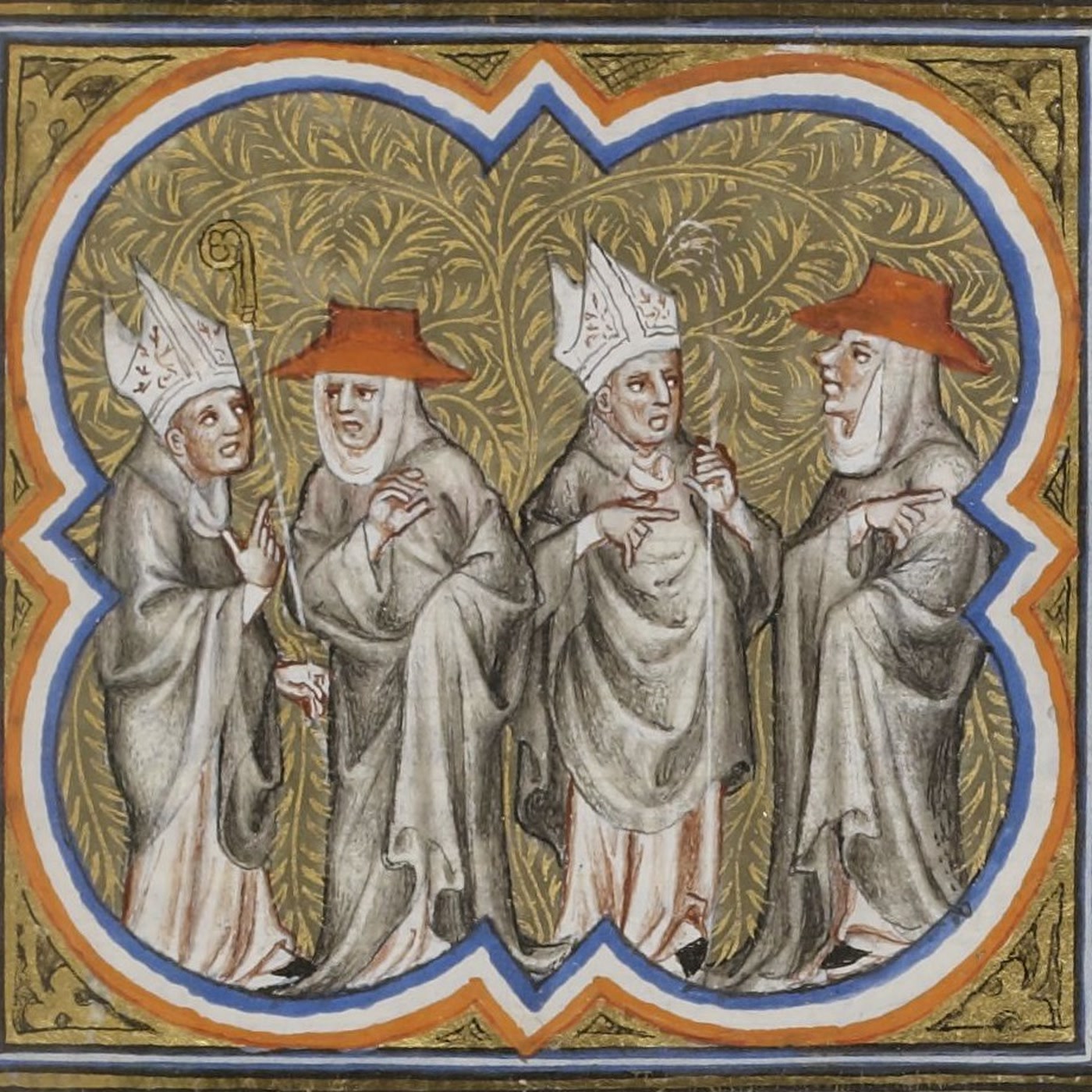
The Western Schism, also known as the Great Divide, the Great Occidental Schism, the Schism of 1378, or the Great Western Schism (Latin: Magnum schisma occidentale, Ecclesiae occidentalis schisma), was a split within the Catholic Church lasting from 20 September 1378 to 11 November 1417, in which bishops residing in Rome and Avignon simultaneously claimed to be the true pope, and were eventually joined by a line of Pisan claimants in 1409. The event was driven by international rivalries, personalities and political allegiances, with the Avignon Papacy in particular being closely tied to the French monarchy. The papacy had resided in Avignon since 1309, but Pope Gregory XI returned to Rome in 1377. The Catholic Church split in September 1378, when, following Gregory XI's death and Urban VI's subsequent election, a group of French cardinals declared his election invalid due to intimidation and violence and, in the presence of three Italian cardinals, elected Clement VII, who claimed to be the true pope. As Roman claimant, Urban VI was succeeded by Boniface IX, Innocent VII and Gregory XII. Clement VII was succeeded as Avignon claimant by Benedict XIII. Following several attempts at reconciliation, the Council of Pisa (1409) declared that both Gregory XII and Benedict XIII were heretical and schismatic, and elected another pope, Alexander V. The schism was finally resolved when Alexander V's successor as Pisan claimant, Antipope John XXIII, called the Council of Constance (1414–1418). The Council arranged for the renunciation of both Roman pope Gregory XII and Pisan antipope John XXIII. The Avignon antipope Benedict XIII was excommunicated, while Pope Martin V was elected and reigned from Rome. The split is sometimes referred to as the 'Great Schism', although this term is usually reserved for the East–West Schism of 1054 between the churches remaining in communion with the See of Rome and those remaining with the See of Constantinople.
https://en.wikipedia.org/wiki/Western%20Schism
Used under the Creative Commons Attribution-ShareAlike License. Material adapted for clarity and narration.
Enluminure symbolisant le Schisme de 1130
Artist: Unknown
License: Public domain
Source: Wikimedia Commons
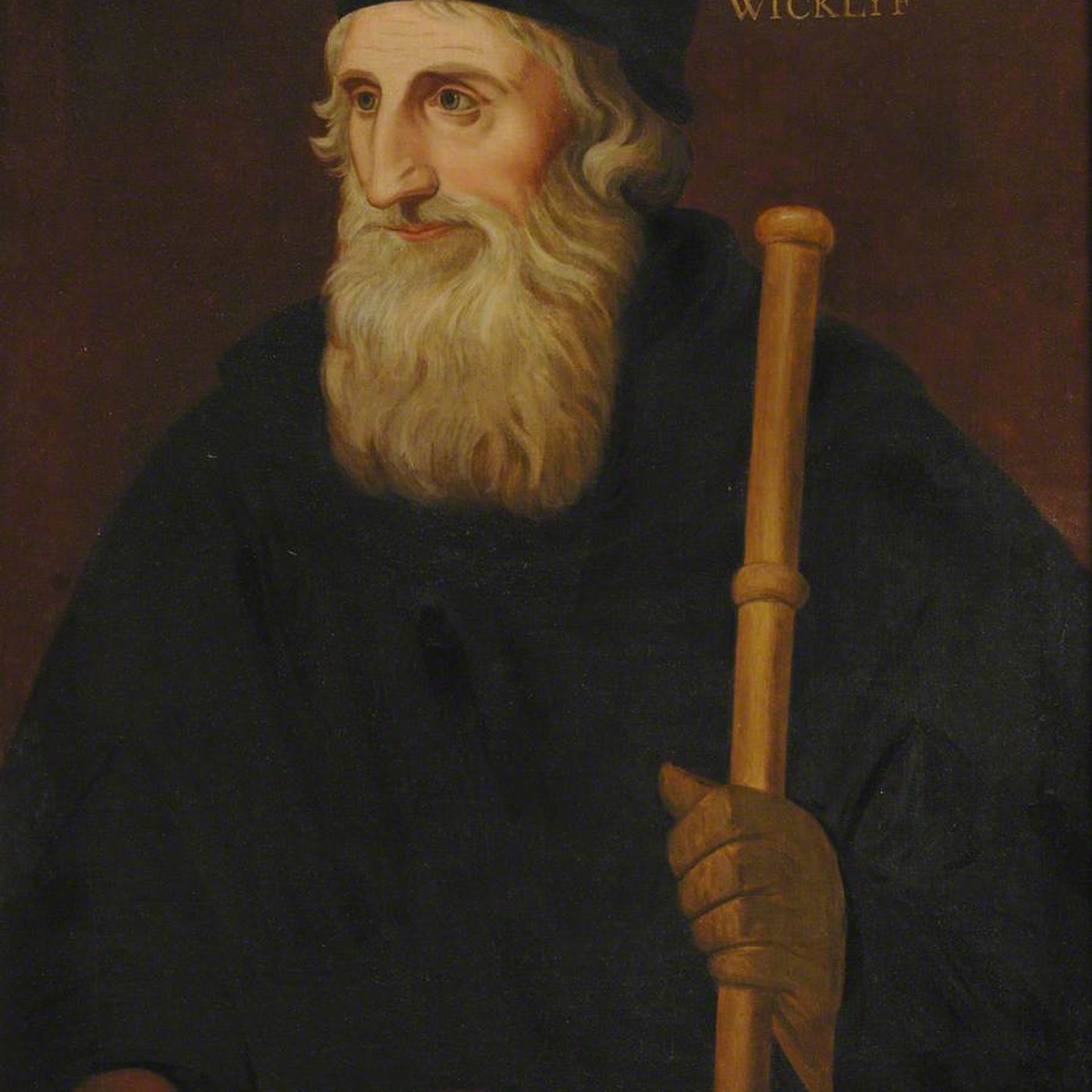
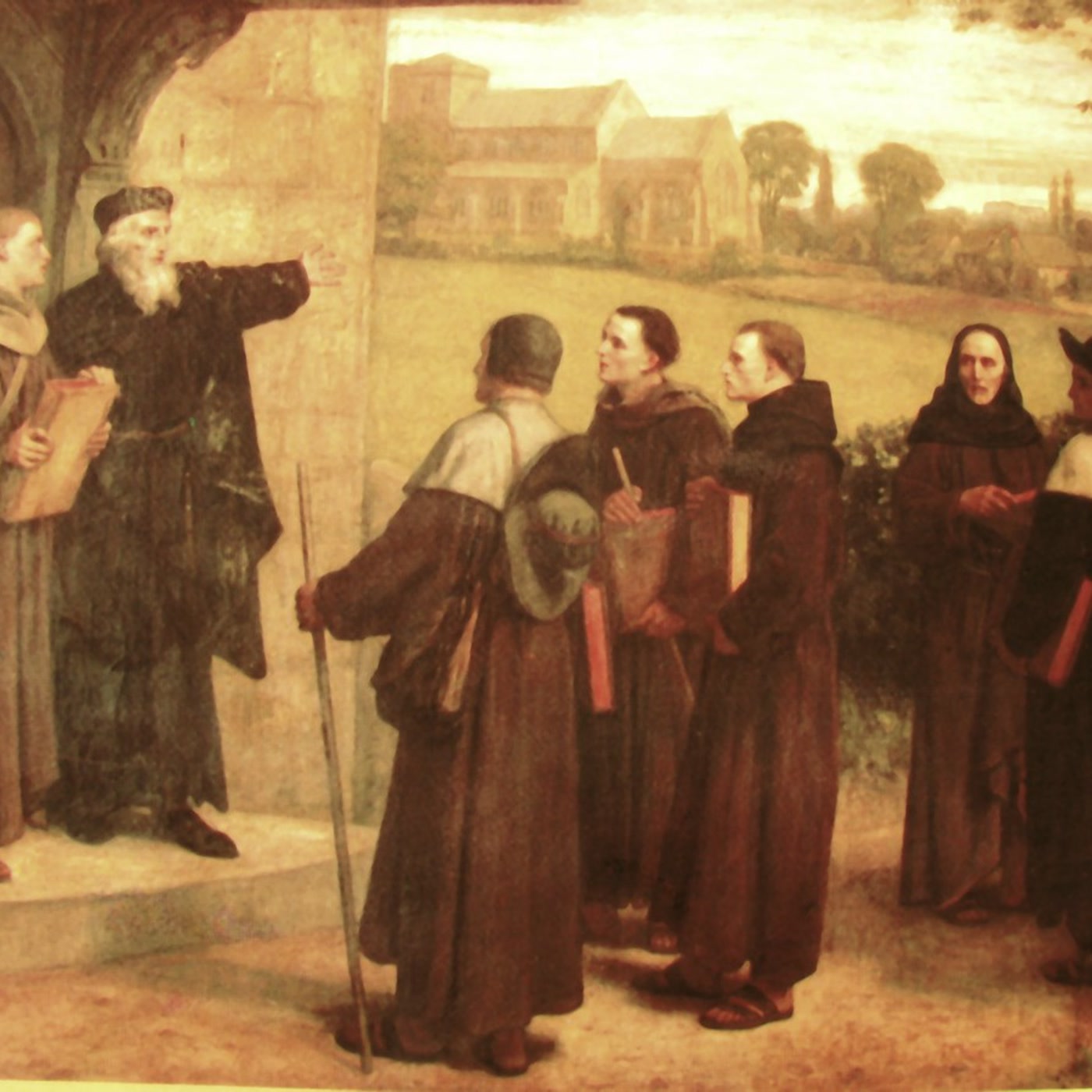
John Wycliffe (; also spelled Wyclif, Wickliffe, Wicklyf etc.; c. 1328 – 31 December 1384) was an English scholastic philosopher, Christian reformer, Catholic priest, and a theology professor at the University of Oxford. Wycliffe is traditionally believed to have advocated for or made a vernacular translation of the Vulgate Bible into Middle English, though more recent scholarship has minimised the extent of his advocacy or involvement for lack of direct contemporary evidence. He became an influential dissident within the Catholic priesthood during the 14th century and his ideas are often considered an important predecessor to Protestantism. His political-theological theory of dominion meant that the church was not allowed to own property or have ecclesiastic courts, and men in mortal sin were not entitled to exercise authority in the church or state, nor to own property. Wycliffe insisted on the radical poverty of all clergy. Wycliffe has been characterised as the "evening star" of scholasticism and as the "morning star" or stella matutina of the English Reformation. Certain of Wycliffe's later followers, derogatorily called Lollards by their orthodox contemporaries in the 15th and 16th centuries, adopted a number of the beliefs attributed to Wycliffe such as theological virtues, predestination, iconoclasm, and the notion of caesaropapism, with some questioning the veneration of saints, the sacraments, requiem masses, transubstantiation, monasticism, and the legitimacy or role of the Papacy. Wycliffe's writings in Latin greatly influenced the philosophy and teaching of the Czech reformer Jan Hus (c. 1369–1415).
https://en.wikipedia.org/wiki/John_Wycliffe
Used under the Creative Commons Attribution-ShareAlike License. Material adapted for clarity and narration.
Portrait of John Wycliffe (c.1330–1384)
Artist: Thomas Kirkby
License: Public domain
Source: Wikimedia Commons
Generated: Sun, 19 Apr 2026 18:38:18 +0000